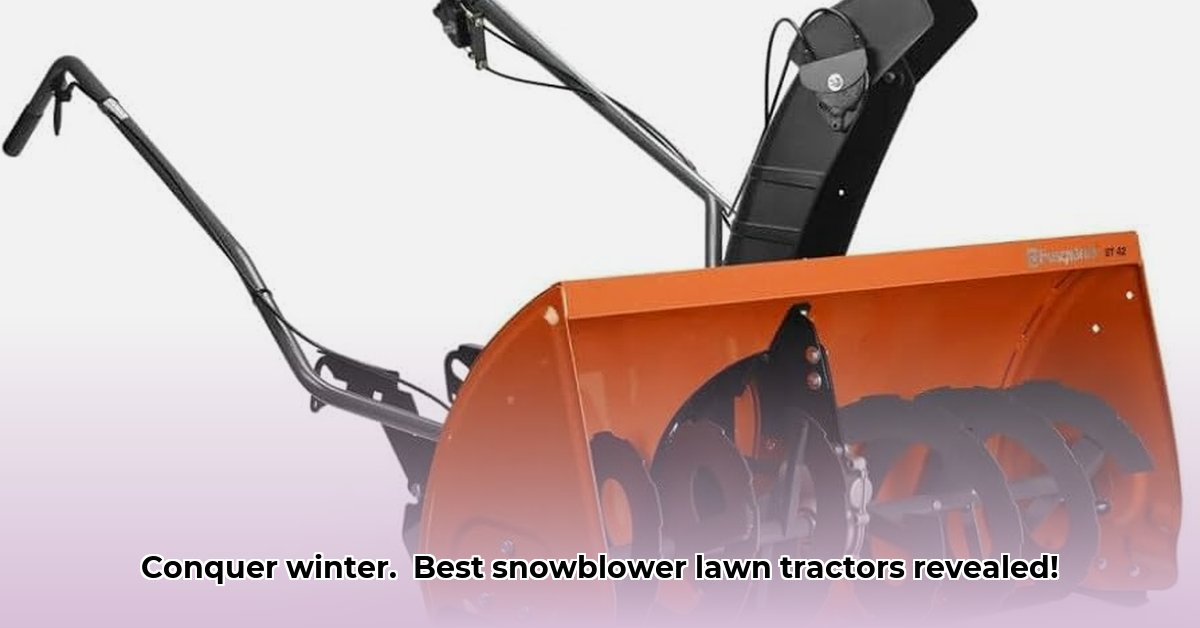
Lawn Tractor Snow Blowers: Your 2025 Winter Survival Guide
Dreading those snowy winter days? Tired of back-breaking shoveling? Then get ready to ditch the shovel and upgrade your snow removal game! This comprehensive guide will equip you with the knowledge to choose, install, and maintain a lawn tractor snow blower, transforming a winter chore into a manageable task. Whether you're a seasoned DIYer or a novice homeowner, we'll provide the clear, step-by-step instructions needed to conquer winter's worst. For John Deere owners, check out this resource for more information. Wouldn't it be great to clear your driveway in a fraction of the time it takes with a shovel? Lawn tractor snow blowers offer just that!
Sizing Up Your Needs: Before You Buy
Before diving into specific models, consider these crucial factors:
Driveway and Snowfall: A small driveway with light snow requires a less powerful blower than a long, winding driveway accumulating significant snowfall. Assess your typical snowfall to determine the necessary power and clearing width.
Tractor Compatibility: Not all snow blowers are compatible with all lawn tractors. Consult your tractor's manual or the manufacturer's website to ensure compatibility. Incorrect compatibility can lead to equipment damage.
Budget: Lawn tractor snow blowers vary widely in price. Establishing a budget beforehand helps narrow your options and prevents impulse purchases exceeding your financial limits. This is a crucial step in the process!
Key Features: What to Look For
Several features differentiate lawn tractor snow blowers. Understanding these will help you choose the best fit:
Engine Power (HP): Horsepower (HP) generally correlates with clearing speed. Higher HP isn't always better; excessive HP can strain your tractor. The right HP will match your needs and your tractor's capabilities.
Clearing Width: A wider clearing width translates to faster snow removal. Match the width to your driveway's dimensions. A wider width is more efficient for larger properties.
Chute Control: This feature directs the snow's trajectory. Electric controls offer precise adjustments, while manual controls require more physical effort. Consider your physical capabilities and preferences. Convenience is key here!
Top Models: A Quick Comparison
The following table offers a comparison of popular models. Remember, specifications may vary, so consult manufacturers' websites for the most up-to-date information. This is just a starting point in your research:
| Model | Engine HP | Clearing Width (inches) | Chute Control | Estimated Price Range |
|---|---|---|---|---|
| Acme PowerClear 5000 | 14 | 48 | Electric, Deflector | $$$$ (High) |
| Beta Blizzard Buster | 10 | 42 | Manual | $$$ (Medium-High) |
| Gamma SnowFighter 200 | 8 | 36 | Manual | $$ (Medium) |
Note: Price ranges are estimates and may vary by retailer and sales.
Installation: A Step-by-Step Guide
Installing your snow blower attachment is usually straightforward, but following these steps ensures a safe and successful installation:
Read Manuals: Thoroughly read the manuals for both your tractor and the snow blower attachment. This is paramount for a safe and successful installation.
Engage PTO: Turn on your tractor and engage the Power Take-Off (PTO) – the mechanism transferring power from the tractor to the snow blower. Your tractor's manual provides detailed instructions.
Attach Snow Blower: Carefully attach the snow blower, aligning pins and tightening bolts according to the instructions. Take your time and ensure a secure connection.
Clear Obstructions: Before starting, ensure the auger (the spinning part that chops up the snow) and chute are free from debris to prevent damage or injury.
Test Run: Perform a slow, brief test run to confirm everything operates correctly before tackling the entire driveway.
Maintenance and Safety: Keeping Yourself and Your Equipment Safe
Regular maintenance is key to ensuring safe and efficient operation:
Regular Cleaning: After each use, remove snow and debris from the auger and chute to prevent damage.
Blade Sharpness: Dull blades reduce efficiency. Sharpen or replace them as needed to maintain optimal performance.
Lubrication: Check and lubricate moving parts as recommended by the manufacturer to ensure smooth operation and prevent wear.
Safety Gear: Always wear appropriate safety gear, including eye protection and gloves, when operating the snow blower. Safety should always be your top priority!
How to Choose the Best Garden Tractor Snowblower Attachment for Your Needs
Key Takeaways:
- Lawn tractor snow blowers excel at quickly clearing large areas, but careful pre-planning is crucial.
- Property size and typical snowfall heavily influence attachment selection.
- Matching the attachment's power requirements to your tractor's capabilities is essential for safe and efficient operation.
- Key factors in choosing an attachment include type (single-stage, two-stage), clearing width, and chute control.
- Regular maintenance significantly extends the lifespan and performance of your snow blower attachment.
Understanding Your Needs: Property Size and Snowfall
Before selecting an attachment, honestly assess your property. How much snow do you typically receive? Do you have a large driveway or expansive acreage? Smaller properties might only need a single-stage snow blower whilst larger areas may require a two-stage model capable of handling heavy, wet snow.
Tractor Compatibility: A Critical Consideration
Your tractor and snow blower attachment must be compatible. Verify your tractor's horsepower (HP) rating and power take-off (PTO) capabilities. The attachment's specifications must align with your tractor's limits to avoid damaging your equipment or causing injury.
Types of Snowblower Attachments: Single-Stage vs. Two-Stage
Single-stage attachments are suitable for light, fluffy snow on smaller properties. They are less expensive and simpler to maintain. Two-stage attachments handle heavier, wetter snow. They are more powerful but require more storage space and are more costly.
Features to Consider: Clearing Width and Chute Control
Consider the necessary clearing width. Wider attachments clear snow faster but might be unsuitable for tight spaces. Chute controls allow you to direct the snow’s trajectory. Hydraulic chute rotation offers effortless control.
Choosing the Right Attachment: A Step-by-Step Guide
- Assess your needs: Evaluate property size, snowfall, and budget.
- Check tractor specs: Verify HP, PTO, and mounting requirements.
- Choose attachment type: Select single-stage for light snow, two-stage for heavy snow.
- Decide on features: Consider clearing width and chute control.
- Read reviews: Thoroughly research models and compare customer experiences.
- Purchase and install: Follow manufacturer instructions meticulously.
Pros and Cons of Tractor Snowblower Attachments
| Feature | Pros | Cons |
|---|---|---|
| Efficiency | Clears large areas quickly and efficiently. | High initial investment. |
| Comfort | Allows seated operation, reducing physical strain. | Requires sufficient tractor power. |
| Versatility | Can be used with various tractor models (with proper compatibility). | Requires storage space. |
| Maintenance | Regular maintenance is essential for optimal performance and longevity. | Can be complex to maintain and repair. |